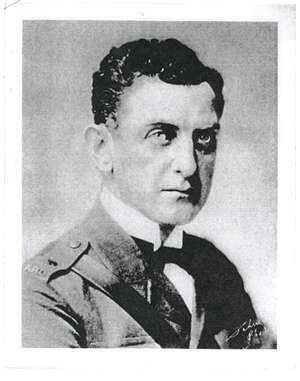
A great man is one who collects knowledge the way a bee collects honey and uses it to help people overcome the difficulties they endure - hunger, ignorance and disease!
- Nikola Tesla

Remember, remember always, that all of us, and you and I especially, are descended from immigrants and revolutionists.
- Franklin Roosevelt

While their territory has been devastated and their homes despoiled, the spirit of the Serbian people has not been broken.
- Woodrow Wilson

Veljkov čudesni „Istočni vetar“ najbolja kompozicija

Veljko Nenadić, 16-godišnji kompozitor i pijanista iz Smedereva, treći put zaredom pobedio je na takmičenju „Golden Key Piano“ u Americi, ovoga puta sa kompozicijom za duduk, frulu i klavir "Istočni vetar", koju je napisao za školsku drugaricu Nedu Nikolić, najboljeg mladog frulaša u Srbiji.

Veljko je pobedio u konkurenciji do 18 godina, poslavši partiture i video-zapis "Istočnog vetra".

- Žiri nije krio zadovoljstvo predivnom melodijom i harmonijama inspirisanim tradicionalnim srpskim foklorom, koji su utkani u ovu izuzetnu kompoziciju, a takođe i virtuoznom interpretacijom na duduku i fruli Nede Nikolić - kaže Romana Repustić Nikolić, razredni starešina mladih muzičara, učenika drugog razreda srednje muzičke škole "Kosta Manojlović" iz Smedereva.

.

Na istom takmičenju, Veljko je osvojio i treću nagradu za klavirsku kompoziciju "Završne minijature". Ovakav uspeh do sada niko nije ostvario na takmičenju koje postoji od 2002. godine, i na kome je učestvovalo 69 takmičara iz 16 zemalja sveta sa pet kontinenata.

Dodela nagrada za kompozitore je 22. jula u Beču, kada se održava završna manifestacija ovog takmičenja u čuvenoj dvorani Erbar hol, gde su nekada nastupali Brams i Maler, i gde će Veljko i Neda odsvirati "Istočni vetar" i primiti nagrade.

Novosti, 8. 1. 2015.


SA


People Directory

Sava Vemić

Sava Vemić (born 1987), bass, comes from Belgrade, Serbia. He is a member of The Metropolitan Opera’s Lindemann Young Artist Development Program in the season 2014/2015.

He studied singing in the Music School Mokranjac with prof. Tanja Obrenović and later at the Faculty of Music, University of Arts in Belgrade with prof. Nikola Mijailović. In Mozart’s Magic flute he made his debut as Sarastro at the opera stage of Madlenianum Opera & Theatre in Belgrade. He received scholarships from the International Vocal Arts Institute (IVAI) in 2013 when he sang Bartolo in an IVAI production of Le nozze di Figaro and in July 2014 when he sang Osmin in their production of Die Entführung aus dem Serial in Tel Aviv, Israel. In June 2014 he made his Carnegie Hall debut as Sir Walter Raleigh in Donizetti’s opera Roberto Devereux with The Opera Orchestra of New York led by Mo. Queler. In 2012 he performed at the Esterhazy festival in Haydnsaal, Austria.

.

Read more ...

Publishing

On Divine Philanthropy

From Plato to John Chrysostom

by Bishop Danilo Krstic

This book describes the use of the notion of divine philanthropy from its first appearance in Aeschylos and Plato to the highly polyvalent use of it by John Chrysostom. Each page is marked by meticulous scholarship and great insight, lucidity of thought and expression. Bishop Danilo’s principal methodology in examining Chrysostom is a philological analysis of his works in order to grasp all the semantic shades of the concept of philanthropia throughout his vast literary output. The author overviews the observable development of the concept of philanthropia in a research that encompasses nearly seven centuries of literary sources. Peculiar theological connotations are studied in the uses of divine philanthropia both in the classical development from Aeschylos via Plutarch down to Libanius, Themistius of Byzantium and the Emperor Julian, as well as in the biblical development, especially from Philo and the New Testament through Origen and the Cappadocians to Chrysostom.

With this book, the author invites us to re-read Chrysostom’s golden pages on the ineffable philanthropy of God. "There is a modern ring in Chrysostom’s attempt to prove that we are loved—no matter who and where we are—and even infinitely loved, since our Friend and Lover is the infinite Triune God."

The victory of Chrysostom’s use of philanthropia meant the affirmation of ecclesial culture even at the level of Graeco-Roman culture. May we witness the same reality today in the modern techno-scientific world in which we live.