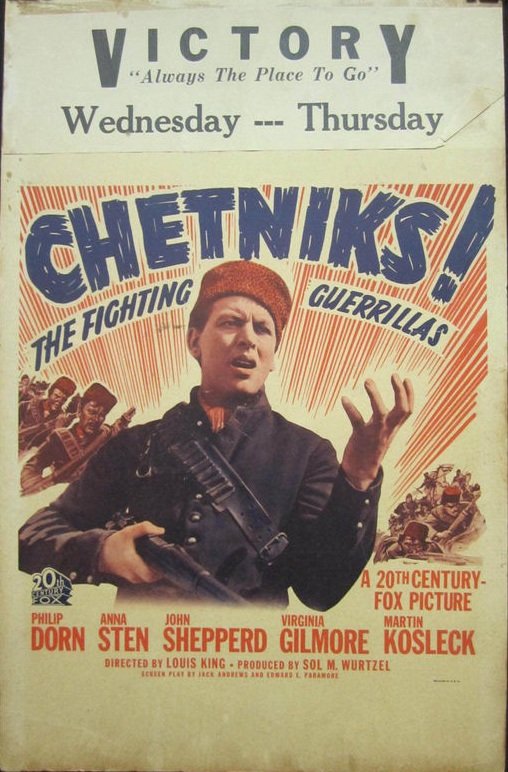
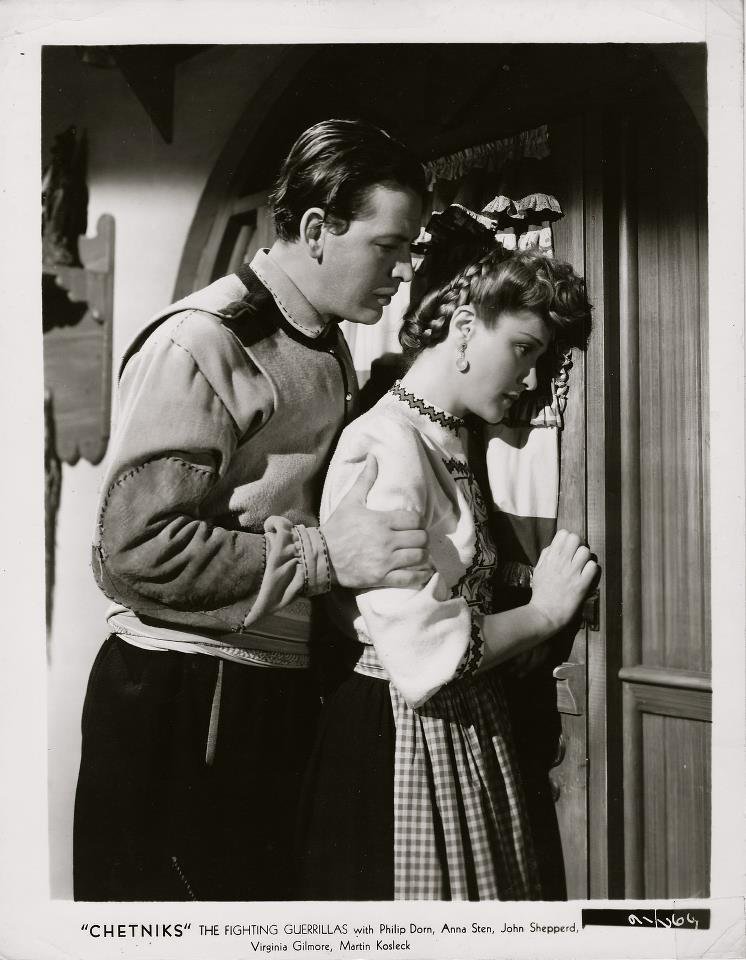
The 1943 American movie Chetniks! The Fighting Guerrillas is a time capsule that shows how Draza Mihailovich and the Chetnik guerrillas were integral parts of the American and Allied war effort. At the height of World War II in 1943, the movie demonstrated their influence and impact on the “greatest generation”. The movie had a widespread impact not only on the American home front, but globally as well.
Prelude to War: Pacifism
When World War II started on September 1, 1939 with the German invasion of Poland, the American public opposed U.S. involvement. Americans were disillusioned with war. World War I had been the war to make the world safe for democracy and the war to end all wars. Instead, the war had created anger and disillusionment. Instead of a negotiated peace settlement, victor’s justice was imposed. The Versailles Treaty was a punitive settlement that rewarded the victors and despoiled the losing countries. Reparations were imposed on Germany that destroyed its economy. One immediate consequence was the financial and economic malaise and collapse in Germany that was the seedbed for extremists like Adolf Hitler. Hitler’s popularity rose and fell in inverse proportion as the economy did.
Woodrow Wilson had created the conditions that allowed for the emergence of Adolf Hitler and World War II. By entering World War I on the side of Britain and France in 1917 to save American bankers such as J.P. Morgan, who were financing the war, he tilted the balance of the war. The American public was against the war and had vehemently opposed U.S. entry. Wilson was re-elected because he had pledged to voters that he would keep the U.S. out of the war. If the U.S. stayed neutral, there would have been a negotiated settlement to end the war because by 1917 the conflict had reached a stalemate. In a controversial punitive settlement, Germany would lose huge chunks of territory and be made guilty of starting the war. By stripping Germany of territory and making Germany pay war reparations, Wilson destroyed the German economy and impoverished the German people. Adolf Hitler exploited this injustice and the road to World War II was thus paved. Wilson did not make the world safe for democracy. He made the world very unsafe. And the American people knew it. This was why Americas did not want to enter World War II.
.