A great man is one who collects knowledge the way a bee collects honey and uses it to help people overcome the difficulties they endure - hunger, ignorance and disease!
- Nikola Tesla

Remember, remember always, that all of us, and you and I especially, are descended from immigrants and revolutionists.
- Franklin Roosevelt

While their territory has been devastated and their homes despoiled, the spirit of the Serbian people has not been broken.
- Woodrow Wilson

Steve Popovich - the man who discovered Meat Loaf

We were all saddened to hear of the passing of iconic Rock singer Meat Loaf aged 74. With all the huge sustained musical success over the decades, it’s hard to imagine now how back in the 1970s no one was interested in the rock theatrical music of composer Jim Steinman and Meat Loaf.

The record labels they approached literally laughed at them – by 1976/77 people were dancing to disco and some were pogoing to punk rock.

Conventional wisdom said there was no market for a 350 lb guy singing epic eight-minute long Wagnerian-style rock anthems.

It took an unconventional, determined, dedicated Cleveland record executive, Steve Popovich to go with his instinct he had honed over 15 years to prove them all wrong and put Meat Loaf on the Musical Map of the World.

Arista records had laughed so hard at their audition, the executives even insulted composer Jim Steinman saying he should go out and buy real rock ‘n’ roll records so he could learn to write proper songs.
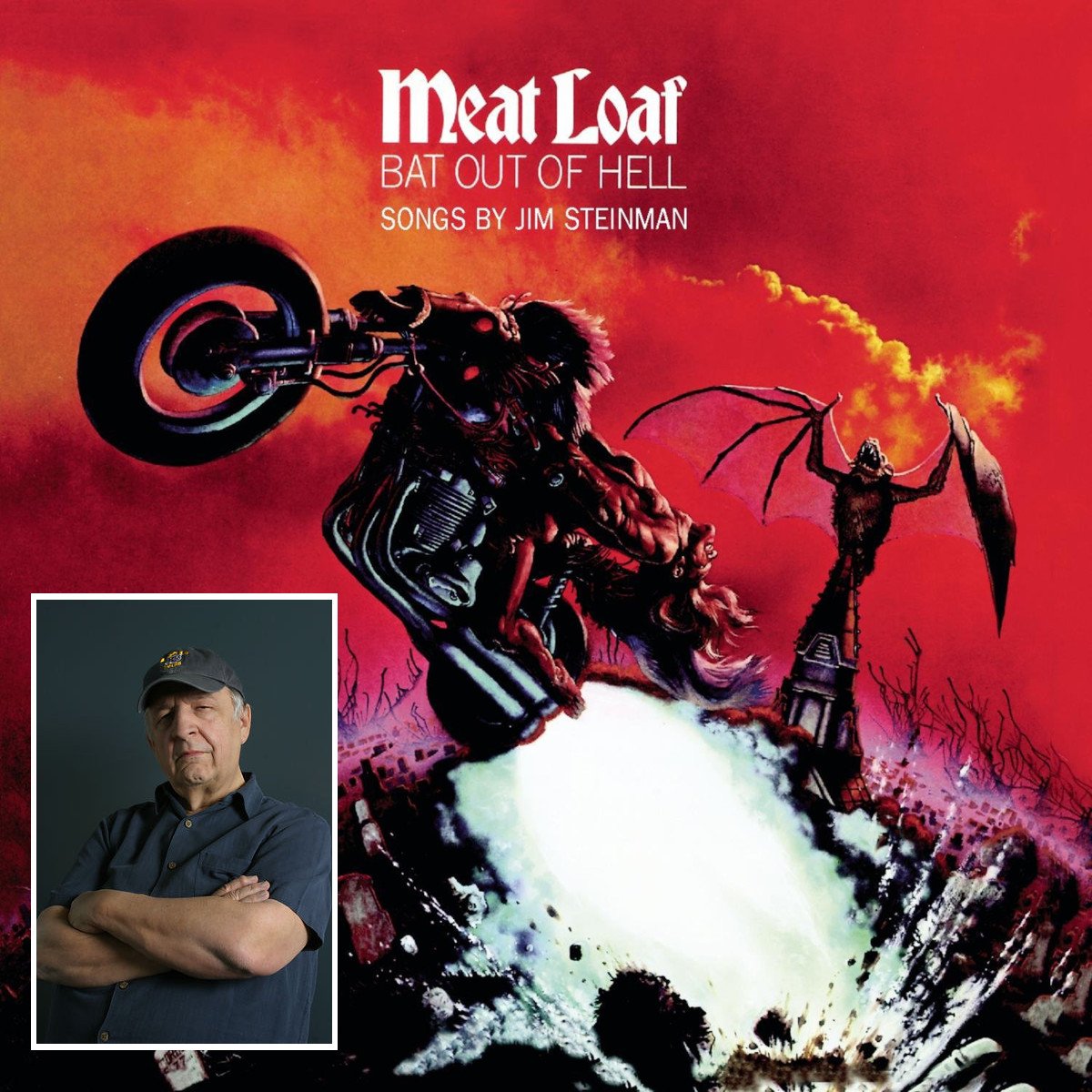
This was two years of solid rejection after rejection. Something Meat Loaf would later recount in his autobiography To Hell And Back.

Warner Brothers had come close to signing Meat Loaf, but the lawyers Mont Blanc fountain pen caps stayed on, no contracts were signed, once more Jim and Michael Lee Adays (Meat Loaf’s birth name) were rejected.

This was their darkest and most desperate moment – they were deep in debt, they had recorded their album with producer Todd Rundgren but every single record label had told them no.

Until brand new label Cleveland International said yes. And to celebrate his second-only label signing CEO Steve Popovich cracked open the Sljivovica.

So who was Steve Popovich?

A veteran of the music scene, brought up on the rock n roll of the 1950s, he had played Yugoslavian folk music before switching to rock ‘n’ roll bass.

By 1962 he started to learn the music business literally from the ground up, starting as a warehouse man at Columbia records, before progressing to stock control, inventory to become one of the top radio promotions men for the company in 1969, helping promote Janis Joplin, Blood Sweat and Tears and others.

Steve had helped to launch the unknown Bruce Springsteen.

After a stint working in Nashville helping promote country artists like Johnny Cash, Steve decided to set up his own record label Cleveland International in 1977.

So why the name Cleveland International?

As Steve himself explained, since the 1950s Cleveland was seen as the breakout market – so what was starting to take off from Cleveland would likely take off in other parts of the USA, and even the world. He gave examples how Mr Alan Freed had his first break on the Moon Dog Show in Cleveland – Freed would go on to coin the phrase Rock ‘n’ Roll for the new teenage music, becoming New York’s top DJ.

Cleveland was also where the Rock & Roll Hall of Fame was sited – and it would be the place from where quite literally Bat Out Of Hell would take everyone by surprise, defy all the critics, all the naysayers and go on to sell over 40 million records, spending over 450 weeks in the UK album charts.
After more than two years the Bat had been launched out of the Hell of disappointment.

And through passion, and dogged determination, and carefully crafted, honed promotional efforts it was Steve Popovich who finally helped Meat Loaf onto the World’s music map.
As well as Meat Loaf passing last week, Sadly in 2021, Meat Loaf’s partner composer/song writer Jim Steinman also passed away – though by 2017 Jim had realised his dream of turning Bat Out Of Hell into a Theatre Musical that is still running today.

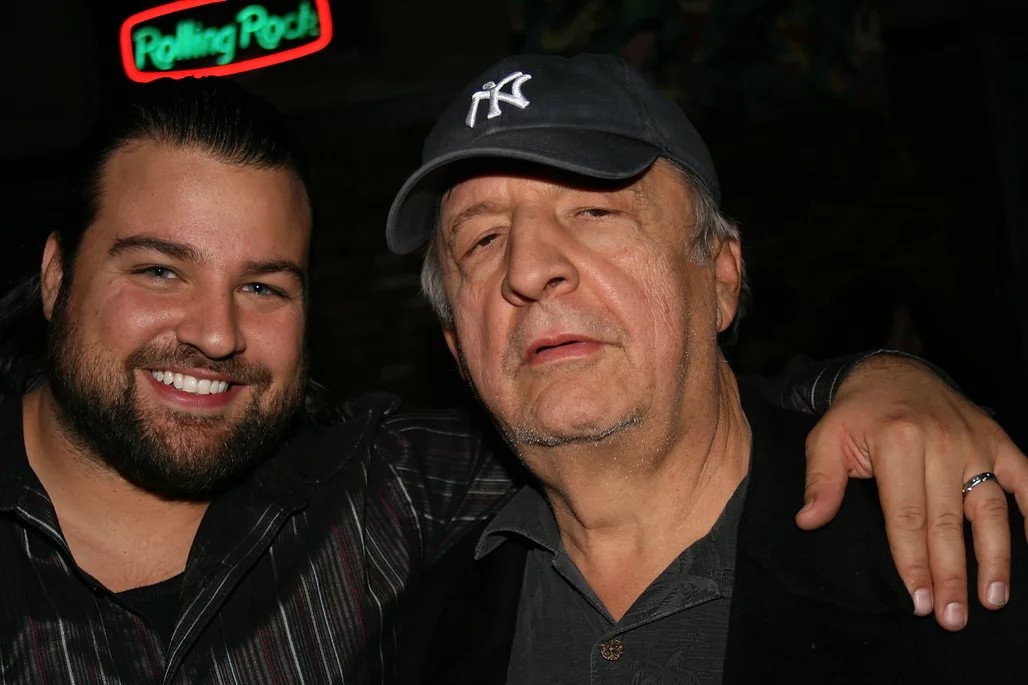
And what of Steve Popovich? Sadly he passed away in 2011 – though as of 2018 his son Steve Popovich Jr has recreated Cleveland International Records as a legacy to his father, which at the moment is based out of Nashville, though there are plans to once again relocate back to Cleveland.

And from one of the several Youtube videos on Steve Popovich:

You have to be stubbornly passionate, because in the end it is your beliefs that are on the line

Soon after Cleveland International Records released Meat Loaf’s Bat Out Of Hell, Rolling Stone Magazine’s called it junk, with no redeemable qualities.

Rolling Stone Magazine was wrong, 40 million plus record sales wrong – and Steve Popovich’s instincts, and dedicated hard work and persistence proved right.

Sources: BBC Hardtalk Stephen Sackur interviews Meat Loaf 2016 – Meat Loaf still likes Brandy!
Meat Loaf Autobiography : To Hell and Back (spelled PopoVitch in book and kindle)
The Steve Popovich Legacy Foundation : www.thepopovichfoundation.org, YouTube Videos Steve Popovich

Source of article: Britić


SA


People Directory

Stana Katic

Stana Katic (born April 26, 1978) is a Canadian film and television actress. She is best known for her portrayal of Detective Kate Beckett on the popular ABC series Castle.

Katic was born in Hamilton, Ontario, Canada, to Serbian parents named Peter and Rada Katić. In describing her ethnicity, she has stated her parents are Serbs. They emigrated from Yugoslavia. Her father is from Vrlika, and her mother is from the surrounding area of Sinj. Katic later moved with her family to Aurora, Illinois. She spent the following years moving back and forth between Canada and the United States.

.
Read more ...

Publishing

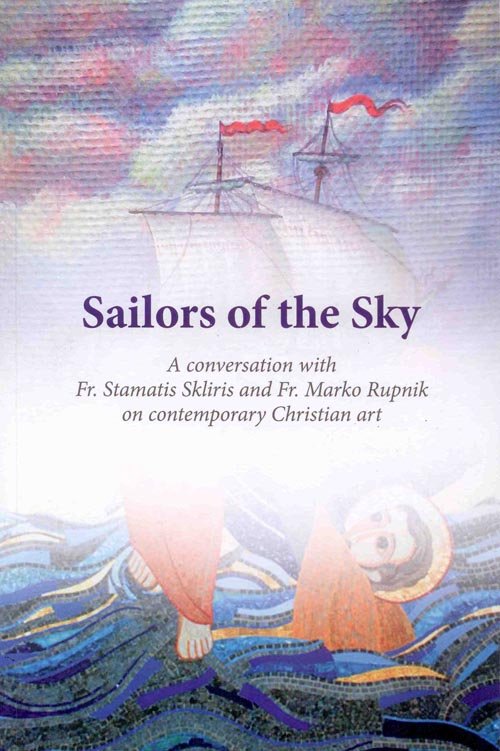
Sailors of the Sky

A conversation with Fr. Stamatis Skliris and Fr. Marko Rupnik on contemporary Christian art

In these timely conversations led by Fr. Radovan Bigovic, many issues are introduced that enable the contemporary reader to deepen and expand his or her understanding of the role of art in the life of the Church. Here we find answers to questions on the crisis of contemporary ecclesiastical art in West and East; the impact of Impressionism, Expressionism, Cubism, Surrealism and Abstract painting on contemporary ecclesiastical painting; and a consideration of the main distrinction between iconography and secular painting. The dialogue, while resolving some doubts about the difference between iconography, religious painting, and painting in general, reconciles the requirement to obey inconographic canons with the freedom essential to artistic creativity, demonstrating that obedience to the canons is not a threat to the vitatlity of iconography. Both artists illumine the role of prayer and ascetisicm in the art of iconography. They also mention curcial differences between iconography in the Orthodox Church and in Roman Catholicism. How important thse distinctions are when exploring the relationship between contemporary theology and art! In a time when postmodern "metaphysics' revitalizes every concept, these masters still believe that, to some extent, Post-Modernism adds to the revitatiztion of Christian art, stimulating questions about "artistic inspiration" and the essential asethetic categories of Christian painting. Their exceptionally wide, yet nonetheless deep, expertise assists their not-so-everday connections between theology, ar, and modern issues concerning society: "society" taken in its broader meaning as "civilization." Finally, the entire artistic project of Stamatis and Rupnik has important ecumenical implications that aswer a genuine longing for unity in the Christian word.

The text of this 94-page soft-bound book has been translated from the Serbian by Ivana Jakovljevic, Fr. Gregory Edwards, and Andrijana Krstic. Published by Sebastian Press, Western American Diocese of the Serbian Orthodox Church, Contemporary Christian Thought Series, number 7, First Edition, ISBN: 978-0-9719505-8-0