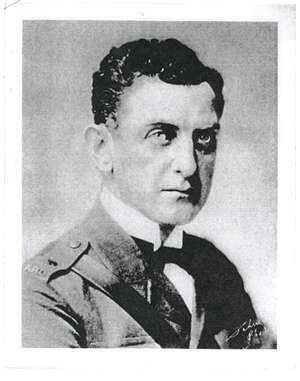
A great man is one who collects knowledge the way a bee collects honey and uses it to help people overcome the difficulties they endure - hunger, ignorance and disease!
- Nikola Tesla

Remember, remember always, that all of us, and you and I especially, are descended from immigrants and revolutionists.
- Franklin Roosevelt

While their territory has been devastated and their homes despoiled, the spirit of the Serbian people has not been broken.
- Woodrow Wilson

The Belgrade Philharmonic Triumphs in Carnegie Hall

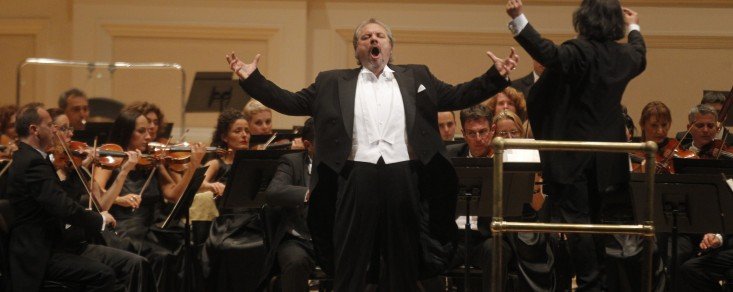
The audience rewarded the Belgrade Philharmonic Orchestra with several minutes of standing ovations for the final concert of its American tour, held in preeminent Carnegie Hall in New York. This historic concert marks the beginning of the new era of the orchestra’s international success.

In a concert hall that represents the artistic dream of any musician, the Belgrade Philharmonic was breathlessly listened to by more than 1500 people. Taking a firm step, the orchestra opened the grand finale of its first American tour with Tchaikovsky’s Slavonic March. The voice of Željko Lučić, who joined the Belgrade Philharmonic by courtesy of the Metropolitan Opera, raised a storm of delight in the audience. The unity and closeness felt in his appearance with the Belgrade Philharmonic brought them back on the stage for encore, in which they performed the aria Eri tu from Verdi’s Un ballo in maschera.

.

“We will become aware of the success achieved in New York tonight only when some time has gone by. Carnegie Hall inspires awe in all musicians around the world and to see a packed hall in front of you is purely amazing. This is the crown of the orchestra’s years of commitment and I hope we will soon repeat this success”, said concertmaster Miroslav Pavlović.

His fellow musician, also a concertmaster, Tijana Milošević continues: “As a student at the Juilliard, I already played in Carnegie Hall, but this is the first appearance here with my own orchestra. I am proud that we have represented Serbia so successfully.”

Sibelius’ Symphony No. 2 demonstrated the whole energy and grandeur of the Belgrade Philharmonic under the baton of Chief Conductor Muhai Tang. The music of Serbian composers Hristić and Binički, performed for encore, additionally enraptured the audience, who refused to let the orchestra off the stage with an applause that lasted several minutes. Eventually, the entire Carnegie Hall was on their feet as the Belgrade Philharmonic’s 96 musicians thankfully bowed to them.

Source: Belgrade Philharmonic Orchestra


SA


People Directory

Sava Vemić

Sava Vemić (born 1987), bass, comes from Belgrade, Serbia. He is a member of The Metropolitan Opera’s Lindemann Young Artist Development Program in the season 2014/2015.

He studied singing in the Music School Mokranjac with prof. Tanja Obrenović and later at the Faculty of Music, University of Arts in Belgrade with prof. Nikola Mijailović. In Mozart’s Magic flute he made his debut as Sarastro at the opera stage of Madlenianum Opera & Theatre in Belgrade. He received scholarships from the International Vocal Arts Institute (IVAI) in 2013 when he sang Bartolo in an IVAI production of Le nozze di Figaro and in July 2014 when he sang Osmin in their production of Die Entführung aus dem Serial in Tel Aviv, Israel. In June 2014 he made his Carnegie Hall debut as Sir Walter Raleigh in Donizetti’s opera Roberto Devereux with The Opera Orchestra of New York led by Mo. Queler. In 2012 he performed at the Esterhazy festival in Haydnsaal, Austria.

.

Read more ...

Publishing

On Divine Philanthropy

From Plato to John Chrysostom

by Bishop Danilo Krstic

This book describes the use of the notion of divine philanthropy from its first appearance in Aeschylos and Plato to the highly polyvalent use of it by John Chrysostom. Each page is marked by meticulous scholarship and great insight, lucidity of thought and expression. Bishop Danilo’s principal methodology in examining Chrysostom is a philological analysis of his works in order to grasp all the semantic shades of the concept of philanthropia throughout his vast literary output. The author overviews the observable development of the concept of philanthropia in a research that encompasses nearly seven centuries of literary sources. Peculiar theological connotations are studied in the uses of divine philanthropia both in the classical development from Aeschylos via Plutarch down to Libanius, Themistius of Byzantium and the Emperor Julian, as well as in the biblical development, especially from Philo and the New Testament through Origen and the Cappadocians to Chrysostom.

With this book, the author invites us to re-read Chrysostom’s golden pages on the ineffable philanthropy of God. "There is a modern ring in Chrysostom’s attempt to prove that we are loved—no matter who and where we are—and even infinitely loved, since our Friend and Lover is the infinite Triune God."

The victory of Chrysostom’s use of philanthropia meant the affirmation of ecclesial culture even at the level of Graeco-Roman culture. May we witness the same reality today in the modern techno-scientific world in which we live.