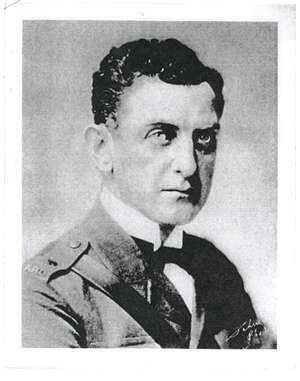
A great man is one who collects knowledge the way a bee collects honey and uses it to help people overcome the difficulties they endure - hunger, ignorance and disease!
- Nikola Tesla

Remember, remember always, that all of us, and you and I especially, are descended from immigrants and revolutionists.
- Franklin Roosevelt

While their territory has been devastated and their homes despoiled, the spirit of the Serbian people has not been broken.
- Woodrow Wilson

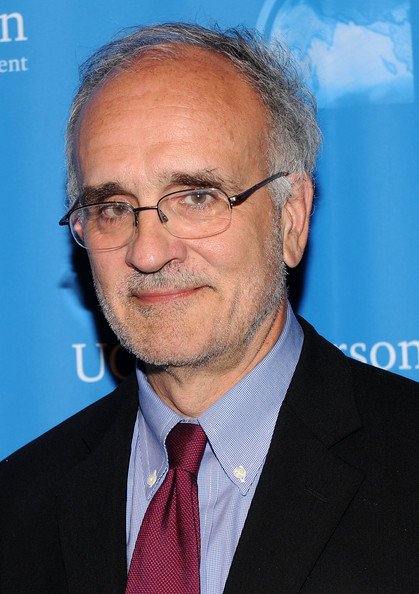
Walt Bogdanich

Walt Bogdanich became the investigations editor for the Business and Finance Desk of The New York Times in January 2001. He recently was named an assistant editor for the paper's newly expanded Investigative Desk.

Born in Chicago on October 10, 1950. Mr. Bogdanich graduated from the University of Wisconsin in 1975 with a degree in political science. He received a master's degree in journalism from Ohio State University in 1976.

.

Before joining The Times in 2001, he was an investigative producer for "60 Minutes" on CBS and for ABC News. Previously, he worked as an investigative reporter for The Wall Street Journal in New York and Washington. He also worked for The Cleveland Press and The Plain Dealer.

As a producer for ABC News, Bogdanich and reporter John Martin became the first to break the important story that tobacco companies were manipulating the degree to which cigarettes pumped nicotine into smokers' bloodstreams. In addition to making Big Tobacco look even more corrupt than was previously believed, this made itmore difficult for Big Tobacco to say that it wasn't in the drug business-a claim it was using to avoid regulation by the FDA.

Bogdanich won the Pulitzer Prize in 1988 for his articles in The Wall Street Journal on substandard medical laboratories. He has also won three George Polk Awards and an Overseas Press Club Award.


SA


People Directory

Petar D. Bubreško

Peter D. Bubresko, professor emeritus, fell asleep in the Lord December 3, 2006. He was an associate professor of French literature & language at Texas Tech University, Lubbock, Texas, which he joined in 1964-77. He earned his B.A. in 1933 and his M.A. in 1935 from the University of Belgrade. He also studied at the University of Grenoble in France (1933-34). He was a recipient of a scholarship from the French Government (1936-39), he studied at Sorbonne under the guidance of Paul Van Thiegen. He prepared in Paris a doctoral thesis on Yovan Dutchich, a study interrupted by WWII. He taught seven years at the junior college level in Yugoslavia and West Germany and later in the United States at St. Olaf College, Northfield, Minn (1960-63).

.
Read more ...

Publishing

The Meaning of Reality

Essays on Existence and Communion, Eros and History

by Christos Yannaras

The collection of articles traces the thought of Christos Yanaras through his long journey in discovering the meaning of existence, communion, eros, and history. It is a cause of immense joy that no fewer than twenty articles of passionate significance and substance have at present been gathered together in this volume under the title The Meaning of Reality.

Yannaras is undoubtedly one of the most significant thinkers of our time. Kallistos Ware once described him as "the most creative and prophetic religious thinker at work in Greece today," while Rowan Williams characterizes him as "one of the most significant Christian philosophers in Europe." His very wide and no less deep education helps him to develop an inimitable blend of philosophy, theology, and social criticism, and to speak in an original way about the traditional and contemporary issues of human existence, as well as the latest challenges of modern empirical science and political engagement. A detailed knowledge of the writings of the Holy Fathers has always been his foundation amidst the labyrinth of modern thought - which is inimately bound up with psychoanalysis, environmental issues, human rights, postmodernism, and pluralism , to mention just a few. Insistence on the primacy, uniqueness, and eternal value of human personality prevails in almost all his works and inspires his own vigorous theological and ecumenical engagement, based on the Orthodox eucharistic and ascetic tradition.