By Darko Dudić (97)
Few of you will have heard of Mike Stepovich but his story is quite something. Son of a stowaway. He rose to become a prominent lawyer and governor. Father of 13. It’s thanks to Mike Stepovich that Alaska became the 49th state of the USA.
Before our story begins, I want to make one thing clear. Mike Stepovich did not wheedle Alaska from the Russians. That 2-cents-per-acre steal was done and dusted a century earlier.
What Mike did do was sweet-talk sceptical locals and the federal government to promote the US territory into a fully fledged state. He was so effective, he had talked himself out of his job as governor.
But we’re getting ahead of ourselves.
Picture the lovely Bay of Kotor back in the 1890s, an impoverished backwater of the Austro-Hungarian Empire. Marko Stijepović grew up at the family homestead on the hillside above the Risan, the oldest settlement in the bay.
He would watch ships come and go destined for all corners of the world and in 1892, aged just 18, decided to stowaway on one of them. He landed on Staten Island New York with no passport or visa and had to rely on ‘Yugoslav’ friends to help him gain US citizenship.
When news broke through the Great Klondike gold rush, Marko quickly resolved to head north and set up shop as a trader of gold pans and the like.
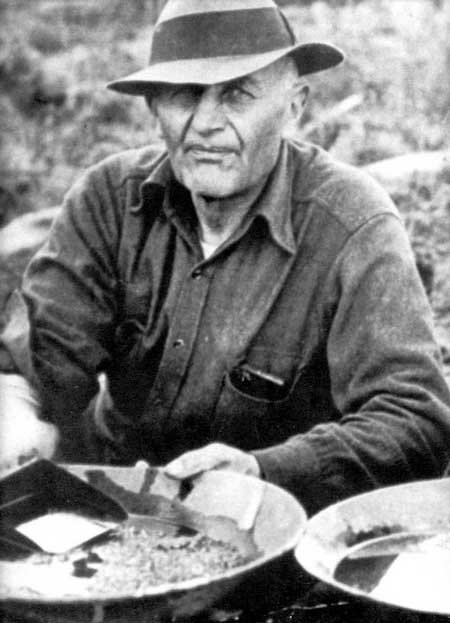
But there was one obstacle – a band of outlaws headed up by Soapy Smith who demanded a ‘toll’ from anyone using their trail. So Marko skirted around and made a new trail avoiding the bandits.
By this time Marko Stijepović had become known as ‘Wise’ Mike Stepovich.
‘Wise’ Mike Stepovich would go on to amass financial fortune and asked for the hand of Olga Barta, a pretty Croatian woman from Portland Oregon. But the match was ill-fated and after a year she left after deciding that life in the wilds of Fairbanks Creek was definitely not for her.
In 1919, the fruit of this union was another Marko Stepovich, who would become known as Mike Stepovich II.
The couple divorced and both would eventually remarry.
Olga took Mike Jnr back to Oregon but when he reached the same 18-year-itch, he joined his father’s business up in in Fairbanks during the summer. During the winter he studied at university, gaining degrees in art and law.
Mike II had enlisted for the US Navy during WW2, when he heard news of his father’s death in 1944.
The apple did not fall far from the tree. Mike too would go on to take a Croatian wife Matilda Baričević from Portland Oregon. The pair settled in his father’s apartment in Fairbanks where he would practise law.
They had thirteen children.
During his tenure as a trial lawyer, Mike could boast that none of his clients ever received the death penalty. For those who could not afford a lawyer, he accepted payment in kind – native village handiwork, the family’s first TV set and snow skis.
These were extraordinary times in the city as you might glean from the saying:
"If you weren’t Yugoslavian during the 1930s and ’40s in Fairbanks, you didn’t go far."
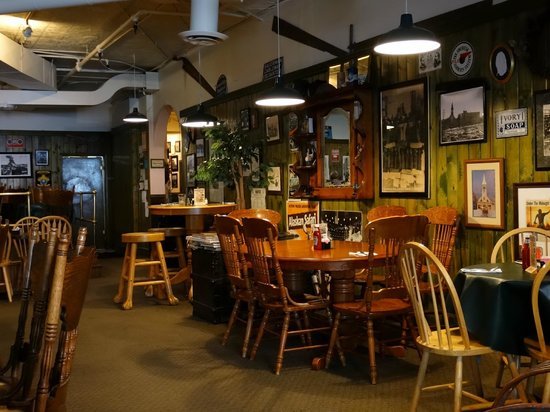
Figures in the world of businesses and politics in Fairbanks included Jackovich Tractor, Model Cafe operated by Steve and Milo Hajdukovich, who owned other commercial properties, Senator John Butrovich and inventor John Miscovich.
But it was also a tough time for those prospectors who came, lived and died in Alaska without ever forming the families they yearned for.
Matilda recalled strolling down Second Avenue in Fairbanks with their firstborn daughter Antonia. She’d hear calls of “Dalmatinka!” in Serbian and gifts of silver dollars into the baby’s pram.
“Having no family, (these prospectors) vanished with the wind, without a trace,” she observed.
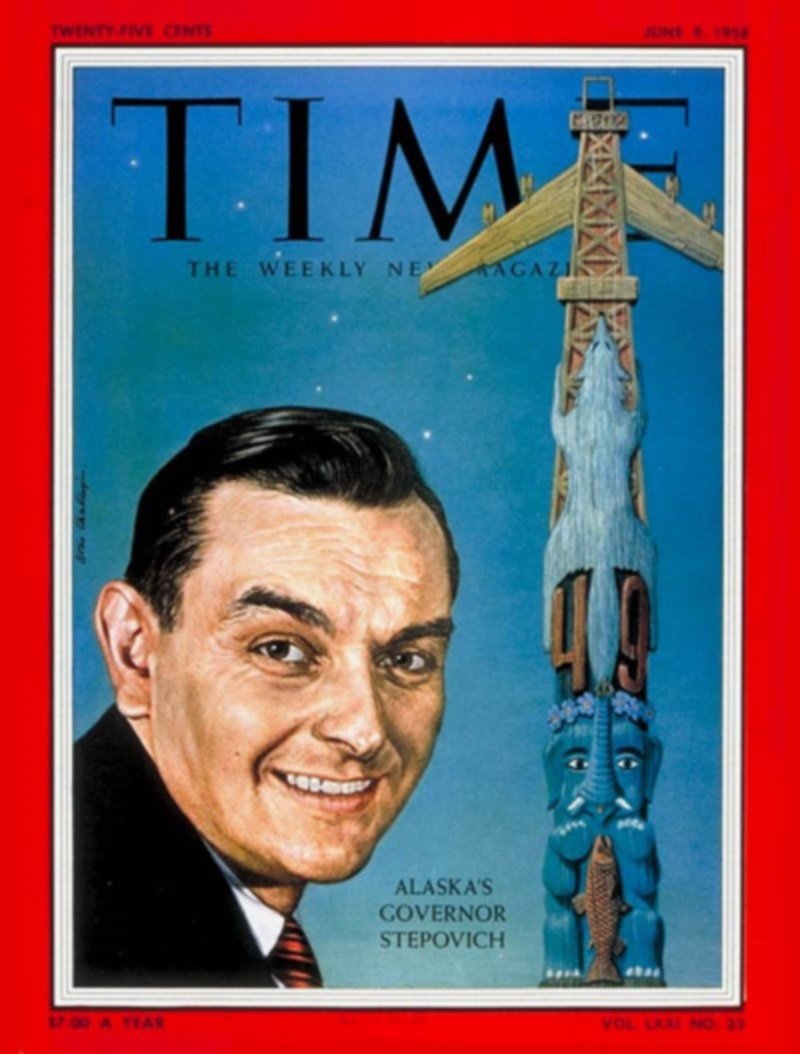
Many of us think that places like Puerto Rico as island states in the Americas. Actually some are sovereign territories of the USA. While they are politically more autonomous than a state, they exercise certain prerogatives with inhabitants being US nationals or citizens and having limited representation in Congress.
Alaska had been a territory of the United States since 1912.
Mike Stepovich strongly felt it should be a fully fledged state. But he had a battle to fight on two fronts.
Fellow Alaskans were weary of federal government sticking its beak into their business. President Dwight Eisenhower was also sceptical of the merits of including this remote and sparsely populated territory into the fold.
But Stepovich was both skilled, persistent and charming. He lobbied far and wide and chose his moments well.
Like the time Eisenhower called for reservists from Alaska to be mobilised for the Vietnam War en masse. That seemed as good a time as any to persuade the President of the merits of raising Alaska to the rank of federal statehood.
The governor of a territory could no longer govern a state so Stepovich ran for state senator and then twice for governor as a Republican. But the political pendulum had swung towards the Democrats. Stepovich returned to a career in law.
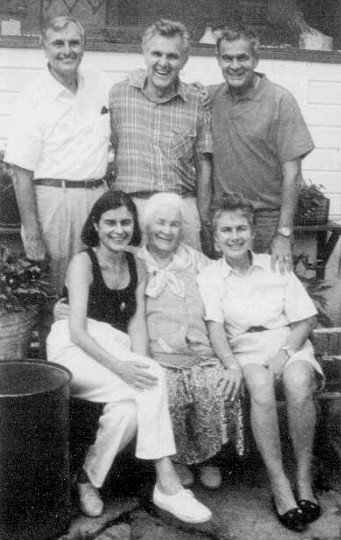
The Stepoviches would get together for regular reunions under the strong matriarchal influence of Vuka Radovic, whom ‘Wise’ Mike went on to marry in Risan in 1929.
Mike Stepovich II was more down-to-earth in an interview he gave to Time magazine in 1958, describing his father as a hard drinker, “rugged and sometimes mean-tempered”.
Mike Stepovich II died aged 95 due to head injuries following a fall.
He left behind a large family. And an even greater historical legacy.
Read more:
- newspaperarchive.com/fairbanks-daily-news-miner-jul-17-1988-p-44/
- nytimes.com/2014/02/20/us/mike-stepovich-led-alaska-to-statehood-dies-at-94.html
- serbiantimes.info/da-li-ste-znali-jedan-crnogorac-otac-13-toro-dece-pripojio-je-aljasku-sad-u/?preview=true
- njegos.org/emigrants/heartland.htm
- legacy.com/obituaries/newsminer/obituary.aspx?n=mike-stepovich&pid=169722287
- alaskamininghalloffame.org/inductees/stepovich.php
Source: Britić