A great man is one who collects knowledge the way a bee collects honey and uses it to help people overcome the difficulties they endure - hunger, ignorance and disease!
- Nikola Tesla

Remember, remember always, that all of us, and you and I especially, are descended from immigrants and revolutionists.
- Franklin Roosevelt

While their territory has been devastated and their homes despoiled, the spirit of the Serbian people has not been broken.
- Woodrow Wilson

Сећање са Пацифика на Владику Атанасија

Епископ Максим у кратком видео запису 28. марта 2021. године говори о недавно преминулом Атанасију (Јевтићу), Епископу херцеговачком, и износи оне његове карактеристике по којима ће га се многи сећати: човек народа, монах, подвижник, теолог, архипастир, професор, проповедник, родољуб, просветитељ народни састрадалник, хроничар и - дете лавовског срца.


SA


People Directory

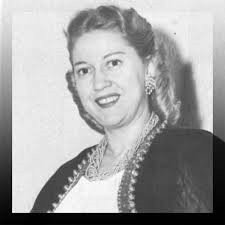
Vinka Ellesin

Vinka Ellesin was a folk singer who sang Serbian music in the sevdalinka style. The national Serbian community referred to her as the "Queen of Sevdalinka". She was born to Serbian immigrants, Djoka and Sophia (Soka) Ellesin, in Akron, Ohio around 1921. By the age of 16, she was singing on a nationally broadcast radio show on WADC. Later, she performed at the Black Whale, a well-known club in Cleveland. In 1938, the bandleader Sammy Kaye invited her to audition to be the lead vocalist in his orchestra, but she turned him down, preferring to continue singing Serbian folk music instead. During World War II, Ellesin performed at the Blue Danube and the Russian Samovar in Detroit, Mich. where she lived. Ellesin stayed in the Pittsburgh area for an extended period of time in the early 1950s while she performed nightly at the Sunrise Inn in Monroeville, Pa. During the 1930s through the 1970s, Ellesin toured throughout North America and Australia while returning to Pittsburgh many times to perform at local Serb National Federation events.

Read more ...

Publishing

Serbian Americans: History—Culture—Press

by Krinka Vidaković-Petrov, translated from Serbian by Milina Jovanović

Learned, lucid, and deeply perceptive, SERBIAN AMERICANS is an immensely rewarding and readable book, which will give historians invaluable new insights, and general readers exciting new ways to approach the history​ of Serbian printed media. Serbian immigration to the U.S. started dates from the first few decades of 19th c. The first papers were published in San Francisco starting in 1893. During the years of the most intense politicization of the Serbian American community, the Serbian printed media developed quickly with a growing number of daily, weekly, monthly and yearly publications. Newspapers were published in Serbian print shops, while the development of printing presses was a precondition for the growth of publishing in general. Among them were various kinds of books: classical Serbian literature, folksong collections, political pamphlets, works of the earliest Serbian American writers in America (poetry, prose and plays), first translations from English to Serbian, books about Serb immigrants, dictionaries, textbooks, primers, etc.

Read more ...